
Bitan Chakraborty and Malati Mukherjee Awarded the Rabindranath Tagore Literary Prize 2024–2025
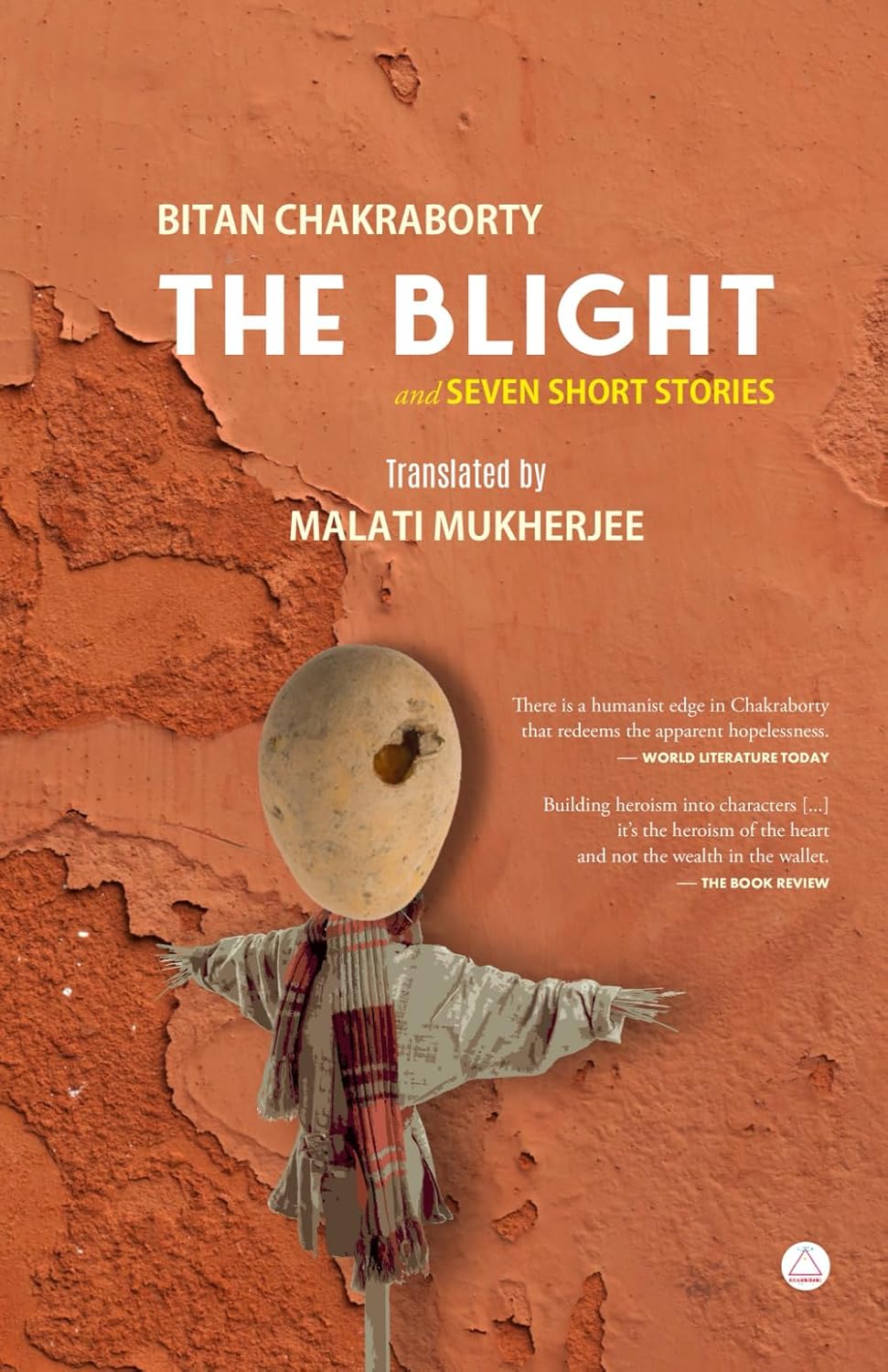
The Rabindranath Tagore Literary Prize 2024–2025 has been awarded to Bitan Chakraborty and Malati Mukherjee for their remarkable work, The Blight and Seven Short Stories (Shambhabi The Third Eye Imprint, 2024). The laureates were revealed today through the Prize’s official online platforms (@tagoreprize) from Copenhagen.
This year’s prize recognizes a literary work that examines the complexities of human nature with striking honesty and artistic refinement. In The Blight and Seven Short Stories, Chakraborty delves into the darker impulses that shape human behavior—ambition, greed, envy, fear, and resignation—set against stark landscapes of deprivation and survival. His characters, often morally ambiguous and emotionally unmoored, illuminate a shared human condition shaped by circumstance, instinct, and vulnerability.
“Chakraborty’s stories do not seek to judge but to reveal,” said Maja Markunovic, Literary Director. “They hold up a mirror to our frailties, urging us to see with clarity rather than condemn.”
The prize is jointly awarded to Malati Mukherjee, whose English translation from the original Bengali preserves the emotional resonance, cultural nuance, and narrative precision of Chakraborty’s work. Her translation ensures that the author’s voice reaches readers across linguistic and cultural boundaries.
“Mukherjee’s translation plays a vital role in this recognition,” the judges noted, praising her ability to carry the emotional depth and cultural nuance of the original Bengali text to a global audience.
Each laureate will be presented with a handcrafted Rabindranath Tagore statuette, created to honor the enduring spirit of the Prize.
About the Rabindranath Tagore Literary Prize
Founded in 2018 by Peter Bundalo, the Rabindranath Tagore Literary Prize honors outstanding literary works that embody the ideals of Rabindranath Tagore—universal humanism, introspection, and cultural harmony. The prize recognizes both original authors and translators whose contributions enrich global literature and foster cross‑cultural understanding.
About the Winners
Bitan Chakraborty is a celebrated Bengali author acclaimed for his incisive psychological portraits and minimalist narrative style.
Malati Mukherjee is a distinguished translator and literary advocate dedicated to bringing regional Indian literature to international readerships.
Congratulations!
Shortlisted Authors for the Rabindranath Tagore Literary Prize 2024–2025
Kalpna Singh-Chitnis, Trespassing My Ancestral Lands, Finishing Line Press, 2024 — poetry collection
Malashri Lal, Mandalas of Time, Hawakal, 2024 — poetry collection
Alka Balain, Parijat: Petals of Longing and Seeking, Hawakal, 2024 — poetry collection
Mrinalini Harchandrai, Rescuing a River Breeze, Bloomsbury, 2023 — novel
Bitan Chakraborty, The Blight and Seven Short Stories, translated from Bengali by Malati Mukherjee, Shambhabi The Third Eye Imprint, 2024 — short story collection
Sanjukta Dasgupta, Indomitable Draupadi, Hawakal, 2022 — poetry collection
Siddharth Dasgupta, A Moveable East, Red River, 2021 — poetry collection
Lopa Ghosh, Age of Mondays, HarperCollins Publishers India, 2025 — novel
Kavita A. Jindal, The Planet Spins on Its Axis, Regardless, Serving House Books, 2025 — short story collection
Aruna Chakravarti, The Mendicant Prince, Picador India, 2022 — novel
Shabir Ahmad Mir, The Last Knot, Macmillan, 2025, an imprint of Pan Macmillan Publishing India — novel
TagorePrize for Social Achievement 2024–2025 Awarded to ISRO
The TagorePrize for Social Achievement 2024–2025 is awarded to the Indian Space Research Organisation (ISRO) in recognition of its extraordinary and enduring contributions to the advancement of science, the empowerment of society, and the betterment of humanity.
ISRO exemplifies the spirit of Rabindranath Tagore’s vision—where knowledge, innovation, and compassion converge to uplift the human condition. This award celebrates not only ISRO’s landmark achievements in planetary exploration, such as the Chandrayaan and Mangalyaan missions, but also its broader legacy of using space science as a transformative force for social good.
From pioneering cost‑effective access to space and enabling global satellite launches, to providing critical infrastructure for disaster management, agriculture, education, and healthcare, ISRO has consistently demonstrated that science is not a privilege of the few, but a shared resource for the many. Its commitment to open data, international collaboration, and inclusive innovation has inspired millions and positioned India as a beacon of scientific leadership in the Global South.
ISRO’s missions to the Moon and Mars—executed with remarkable ingenuity and frugality—have expanded humanity’s understanding of the cosmos and ignited the imagination of a new generation of scientists, engineers, and dreamers across the world. These missions embody ISRO’s ethos: bold in ambition, grounded in service, and guided by responsibility to both planet and people.
In honoring ISRO, we affirm our belief that the pursuit of knowledge, when rooted in equity and empathy, is among the highest forms of social achievement. We extend our deepest admiration and congratulations to the scientists, engineers, and visionaries of ISRO, whose work continues to illuminate the path toward a more connected, informed, and inspired world.
The laureate will be presented with a handcrafted Rabindranath Tagore statuette, a work of art created to embody the enduring spirit and ideals of the Prize. Designed with care and intention, the statuette reflects Tagore’s legacy of creativity, humanism, and universal harmony. Its artistry stands as both a symbol of distinguished service to humanity and a lasting tribute to the laureate’s profound contribution to the betterment of society and the upliftment of the human spirit.
Rabindranath Tagore Literary Prize is a legacy to Rabindranath Tagore, his outstanding contribution to Indian and international literature, as well as to the cultural, educational and humane ideas he pursued throughout his life.
Thank you for following us!